

 Send Email
 whatsapp


Hot Products



0102030405


TBCC
TBCC
Tribasic Copper Chloride (TBCC)
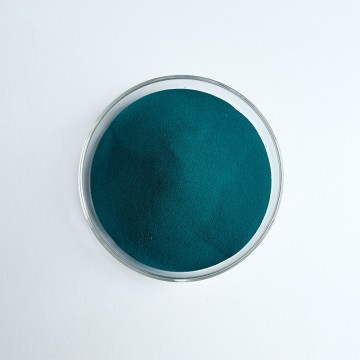
Minexo C (TBCC): Dark green and light green powder or granule, insoluble in water, difficult to absorb moisture, stable nature.
| Item | Minexo C (TBCC) |
|---|---|
| Ingredient (%) | ≥98 (Cu2(OH)3Cl) |
| Content (%) | ≥58.12 (Cu) |
| Cl (%) | —— |
| Water-soluble chloride (Cl) (%) | —— |
| Acid non-soluble substance (%) | ≤0.2 |
| As (%) | ≤0.002 |
| Pb (%) | ≤0.001 |
| Cd (%) | ≤0.0003 |
| Moisture | ≤5% |
| Density (g/ml) | 1.5-1.7 |
| Particle Size Range | 0.25mm pass rate 95% |
| Crude Ash | 65-70% |
| Appearance | Dark green powder or granule |
Technical Indicator
TBCC Molecular Formula: Cu2(OH)3Cl; Molecular Weight: 213.57.
A kind of green to dark green crystalline particles, insoluble in water, not easy to absorb moisture, stable nature.
Features of Tribasic Copper Chloride (TBCC)
High Stability & Low Oxidation
The product is stable in nature and has little oxidative damage. Its oxidative damage to fat soluble vitamins and fats is weaker than that of copper sulfate.
High Copper Content & Specific Solubility
The copper content in the product is high, insoluble in water, soluble in neutral salt and acid solution.
Excellent Physical Properties
The product is not easy to absorb moisture and agglomerate in the production process, and is easy to mix.
Rapid Dissolution
Its nature determines that it can be rapidly dissolved in the digestive tract, improving the absorption and utilization of copper.
Environmentally Friendly & Efficient
The content of copper ions is high, and the absorption and utilization rate is high. In practical application, the addition of copper can be reduced, and the excretion of fecal copper can be reduced.
Function of Tribasic Copper Chloride (TBCC)
Growth Promotion in Piglets
Cromwell et al. (1998) showed that basic copper chloride was as effective as copper sulfate in promoting the growth of weaned piglets. 150ppm basic copper chloride is more effective than 200ppm copper sulfate.
Nutrient Preservation
Hooge et al. showed that when the level of Cu addition was the same, the content of VE in the diet supplemented with TBCC was significantly higher than that in the diet supplemented with CuSO4.
Higher Safety Margin
Luo Xugang et al. (2008) showed that the level of toxic copper from basic copper chloride is 2-3 times higher than that from copper sulfate. Therefore, basic copper chloride is safer and more reliable as a copper source additive.
Superior Bioavailability
Miles et al. (1998) showed that in the growth test of broilers, the bioavailability of copper sulfate was 100%, and the relative bioavailability of basic copper chloride was 112%. Liu et al. (2005) found that the relative biological potency of basic copper chloride and copper sulfate in laying hens was 134%.
Application: Being added to animals feed to supplement copper to animals.
Application Instructions for Tribasic Copper Chloride (TBCC)
| Animal Species | Recommended Dosage (g/MT) - Minexo C (TBCC) |
|---|---|
| Pig | 20-40 (piglet: 170-210) |
| Poultry | 10-35 |
| Aquatic animal | 3-15 |
| Ruminant | 20-25 |
| Other species | 10-25 |
Frequently Asked Questions (FAQ)
What is Tribasic Copper Chloride (TBCC)?
Tribasic Copper Chloride (TBCC), with the molecular formula Cu2(OH)3Cl, is a green to dark green crystalline powder or granule. It is insoluble in water, highly stable, and resistant to moisture absorption, making it an excellent copper source additive for animal feed.
Why is TBCC preferred over copper sulfate in animal feed?
TBCC causes significantly less oxidative damage to fat-soluble vitamins and fats compared to copper sulfate. Additionally, it has a high copper content, does not easily agglomerate during production, and is easy to mix evenly into feed.
How does TBCC improve growth and bioavailability in livestock?
TBCC dissolves rapidly in the animal's digestive tract, leading to higher absorption and utilization rates. Research shows a relative biological potency of 112% in broilers and 134% in laying hens compared to copper sulfate. For piglets, 150ppm of TBCC is more effective than 200ppm of copper sulfate.
Is TBCC safe for animals?
Yes. Studies (such as Luo Xugang et al., 2008) indicate that the toxic threshold of copper from TBCC is 2 to 3 times higher than that from copper sulfate. This wider safety margin makes TBCC a much safer and more reliable copper source additive.
What is the recommended dosage of TBCC for different animals?
The recommended dosage (g/MT) varies by species: Pig: 20-40 (piglets: 170-210); Poultry: 10-35; Aquatic animals: 3-15; Ruminants: 20-25; and other species: 10-25.
What are the packaging and storage requirements for TBCC?
TBCC is packaged in 25kg bags and has a shelf life of 24 months. It should be stored in a cool, dry, dark, and well-ventilated area to maintain its stability.